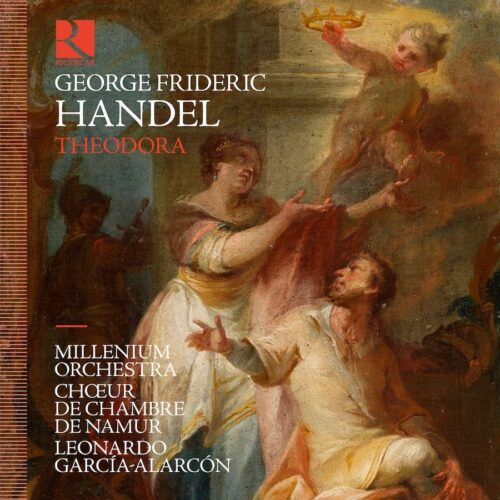
George Frideric Handel
Theodora
Millenium Orchestra, Chœur de Chambre de Namur, Leonardo García-Alarcón, direzione
Etichetta: Ricercar
Formato: CD
N. supporti: 3
Codice catalogo: RIC485
Codice a barre: 5400439004856
Uscita in Italia: 10 aprile 2026
Ufficio commerciale: sales@self.it
Distributore: Self Distribuzione Milano
TRACCE
George Frideric Handel
Ouverture
Recitative: ’Tis Dioclesian’s natal day (Valens)
Air: Go, my faithful soldier (Valens)
Chorus of Heathens: And draw a blessing down
Recitative: Vouchsafe, dread Sir, a gracious ear (Didymus, Valens)
Air: Racks, gibbets, sword and fire (Valens)
Chorus of Heathens: For ever thus stands fix’d the doom
Recitative: Most cruel edict! (Didymus)
Air: The raptur’d soul defies the sword (Didymus)
Recitative: I know thy virtues, and ask not thy faith (Septimius)
Air: Descend, kind pity, heav’nly guest (Septimius)
Recitative: Though hard, my friends (Theodora)
Air: Fond, flatt’ring world, adieu! (Theodora)
Recitative: O bright example of all goodness! (Irene)
Chorus of Christians: Come, mighty Father, mighty Lord
Recitative: Fly, fly, my brethren, heathen rage pursues us swift (Messenger, Irene)
Air: As with rosy steps the morn (Irene)
Chorus of Christians: All pow’r in Heav’n above or earth beneath
Recitative: Mistaken wretches! (Septimius)
Air: Dread the fruits of Christian folly (Septimius)
Recitative: Deluded mortal! (Theodora, Septimius)
Accompagnato: Oh, worse than death indeed! (Theodora)
Air: Angels, ever bright and fair (Theodora)
Recitative: Unhappy, happy crew! (Didymus, Irene)
Air: Kind Heav’n, if virtue be thy care (Didymus)
Recitative: O love, how great thy pow’r! (Irene)
Chorus of Christians: Go, gen’rous, pious youth
Recitative: Ye men of Antioch, with solemn pomp (Valens)
Chorus of Heathens: Queen of summer, queen of love
Air: Wide spread his name (Valens)
Recitative: Return, Septimius, to the stubborn maid (Valens)
Chorus of Heathens: Venus laughing from the skies
Sinfonia (Largo)
Recitative: O thou bright sun! (Theodora)
Air: With darkness deep, as is my woe (Theodora)
Air (Lentement)
Recitative: But why art thou disquieted, my soul? (Theodora)
Air: Oh, that I on wings could rise (Theodora)
Recitative: Long have I known thy friendly social soul (Didymus, Septimius)
Air: Though the honours that Flora and Venus receive (Septimius)
Recitative: Oh, save her then (Didymus, Septimius)
Air: Deeds of kindness to display (Didymus)
Recitative: The clouds begin to veil the hemisphere (Irene)
Air: Defend her, Heav’n! (Irene)
Recitative: Or lull’d with grief, or rapt her soul to Heav’n (Didymus)
Air: Sweet rose and lily, flow’ry form (Didymus)
Recitative: Oh, save me, Heav’n, in this my perilous hour! (Theodora, Didymus)
Air: The pilgrim’s home, the sick man’s he (Theodora)
Accompagnato: Forbid it, Heav’n! (Didymus)
Recitative: Or say, what right have I (Didymus, Theodora)
Duett: To thee, thou glorious son of worth (Theodora, Didymus)
Recitative: ’Tis night, but night’s sweet blessing is denied (Irene)
Chorus of Christians: He saw the lovely youth, death’s early prey
Air: Lord, to Thee each night and day (Irene)
Recitative: But see, the good, the virtuous Didymus! (Irene, Theodora)
Air: When sunk in anguish and despair (Theodora)
Solo and Chorus: Blest be the hand, and blest the pow’r (Christians, Theodora)
Recitative: Undaunted in the court stands Didymus (Messenger, Irene)
Accompagnato: O my Irene, Heav’n is kind (Theodora)
Recitative: Stay me not, dear friend (Theodora)
Duet: Whither, Princess, do you fly (Irene, Theodora)
Recitative: She’s gone, disdaining liberty and life (Irene)
Air: New scenes of joy come crowding on (Irene)
Recitative: Is it a Christian virtue then (Valens, Didymus)
Recitative: Be that my doom. You may inflict it here (Theodora, Septimius)
Air: Cease, ye slaves, your fruitless pray’r! (Valens)
Recitative: ’Tis kind, my friends, but kinder still (Didymus, Theodora)
Chorus of Heathens: How strange their ends
Recitative: On me your frowns, your utmost rage exert (Didymus, Theodora, Valens)
Air: Ye ministers of justice, lead them hence (Valens)
Recitative: And must such beauty suffer? (Didymus, Theodora)
Air and Duett: Streams of pleasure ever flowing (Didymus, Theodora)
Recitative: Ere this, their doom is past and they are gone (Irene)
Chorus of Christians: O love divine, thou source of fame
VIDEO
DESCRIZIONE
L’oratorio Theodora fu eseguito per la prima volta al Covent Garden Theatre il 16 marzo 1750 e colse di sorpresa il pubblico londinese. Händel aveva infatti compiuto una svolta di centottanta gradi nella scelta del soggetto. Gli episodi grandiosi dell’Antico Testamento, le gloriose vicende di Salomone, Saul o Giuda Maccabeo non sono più al centro dell’opera: la giovane martire Theodora non guida né una comunità né delle truppe in battaglia.
In un’opera lontana dallo spettacolo grandioso degli oratori biblici, Händel ci invita a contemplare la toccante vicenda di un dramma personale, un dramma degli albori del cristianesimo alimentato dalla coscienza, dalla fede e dal dolore che esse provocano.